
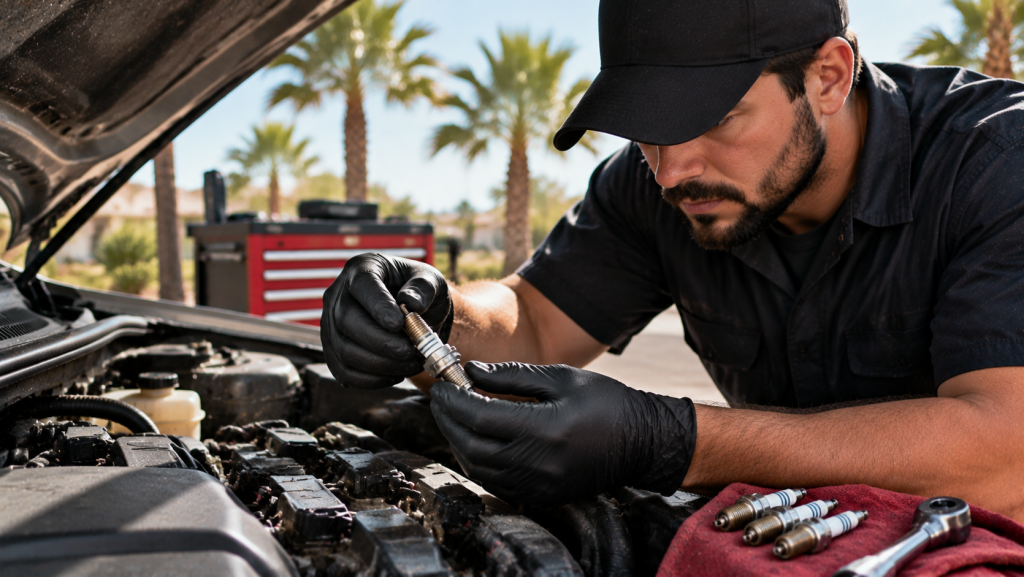
When the long Arizona summer finally eases and the mornings start to feel pleasant again, most of us head outside, plan trips and finally catch up on the things we put off. Your car deserves a place on that list. Summer in Chandler is hard on vehicles, and by the time fall arrives, many cars have been running on borrowed time. The cooler months are a smart window to look things over, replace what has worn out and get ready for the rest of the year. This guide explains why fall is a great time for a tune up, what a modern tune up actually includes, what warning signs to look for and how to get it done without disrupting your week. If you are looking for a tune up in Chandler, AZ, here is why now makes sense.
What Summer Leaves Behind
Months of high temperatures take a toll on nearly everything under the hood and around the car. Heat stresses the battery, the cooling system, belts and hoses, rubber parts, fluids and tires. Dust and dirt clog filters. The air conditioning works overtime for months. Even if the car never broke down, small amounts of wear add up, and they may not be obvious until something finally gives out. Our post on why Chandler’s summer heat is brutal on tires and batteries explains how much the hot months demand from those two parts in particular, and it is a good reminder of why a post summer check is worthwhile.
Why the Cooler Months Are Ideal
Problems are less likely to turn into emergencies
A weak part that survives a mild day may fail on a scorching one. By catching problems when the weather is easier, you reduce the chance of being stranded in extreme heat, which is the most uncomfortable and risky place to break down.
It is a comfortable time to get work done
Servicing a car outdoors in the middle of summer is rough on everyone. Cooler weather is simply more comfortable for you and for the technician, and for any service that happens at your home or workplace.
You can plan ahead for travel and the holidays
Fall leads into the busiest travel season of the year. Road trips, visits with family and holiday errands all mean more time behind the wheel. A tune up before those plans begin helps your car handle the miles.
You have time to fix what turns up
If an inspection finds something that needs attention, you have time to order parts, schedule the repair and avoid rushing. Waiting until a problem forces your hand rarely goes as smoothly.
It gets your car ready for the rest of the year
Even in the desert, nights can turn cool and conditions change. Batteries, tires, lights and wipers all benefit from a check before the seasons shift.
What a Tune Up Means Today
The word tune up goes back to a time when engines needed regular manual adjustments to keep running well. Modern cars are controlled by computers and need far less of that kind of tinkering. Today, a tune up is more of a general term for a round of preventive maintenance that keeps the engine and related systems running as they should. What it includes depends on your vehicle and what your owner’s manual calls for, but it often covers:
- Spark plugs and ignition parts. Spark plugs wear over time, and worn ones can cause rough running, hard starting and wasted fuel. Replacement timing is listed in your owner’s manual.
- Air filter. A clogged engine air filter can make the engine work harder, and dusty conditions can clog filters faster.
- Cabin air filter. This affects the air you breathe inside the car and how well the AC and heater move air.
- Fuel system service, where the manufacturer recommends it, including checking the fuel filter if your car has one.
- Engine oil and filter. Fresh oil protects the engine.
- Coolant and other fluids. Coolant, brake fluid, transmission fluid, power steering fluid and washer fluid should all be checked and serviced according to your manual.
- Belts and hoses. Heat can leave rubber brittle, cracked or soft.
- Battery and charging system test. The battery may have taken a beating over the summer.
- Tires. Check pressure, tread, wear patterns and signs of damage, and have them rotated and aligned as needed.
- Brakes. Pads, rotors and fluid should be inspected.
- Lights and wipers. Quick checks that matter for safety.
- Air conditioning performance. A weak AC is worth noting before it quits for good.
- Scan for fault codes. A technician can check for stored codes that may point to developing issues.
Your owner’s manual lists what the manufacturer recommends and when. Following it is the most reliable way to know what your car needs, and a good technician will work from it rather than selling you a list of unneeded services.
Signs Your Car Is Due for a Tune Up
- Rough idle or shaking when stopped.
- Hard starting, or an engine that cranks longer than it used to.
- Poor fuel economy. If you are filling up more often than usual, something may be off.
- Hesitation or sluggish acceleration.
- Misfires, where the engine stumbles or jerks.
- A check engine light. If it is flashing, that is urgent. Reduce speed, avoid heavy acceleration and get the car checked promptly.
- Strange noises, such as ticking, squealing or rattling.
- Weak air conditioning or reduced airflow.
- Hot weather struggles, such as a temperature gauge that creeps up.
None of these signs automatically means a tune up is the answer, since many have different causes. But they are all good reasons to have a technician take a look.
Why Spark Plugs Matter
Spark plugs create the spark that ignites the fuel and air mixture in each cylinder. Over time the electrodes wear, deposits build and the spark gets weaker. Worn plugs can lead to misfires, rough idle, reduced power and poorer fuel economy. Different engines use different plug types, and replacement timing varies a lot, so always go by your owner’s manual. If you are curious about when to swap them out, a technician can inspect them and advise.
Keep Good Maintenance Records
Whenever you have service done, keep the paperwork. Records help you remember what was done and when, make it easier to follow your maintenance schedule and can be useful if you sell the car. If your vehicle is covered by a warranty or service contract, the terms usually describe what maintenance is expected, so read your documents carefully. Our extended car warranty FAQ covers common questions on that topic.
Tips to Make the Most of Fall Maintenance
- Start with your owner’s manual and check what is due.
- Make a list of symptoms you have noticed, even small ones.
- Do not wait for a breakdown. Preventive service is easier to schedule than a rescue.
- Ask what is needed now and what can wait. A good technician will separate urgent items from routine ones.
- Combine services so you handle several items in one visit.
- Test the battery and tires, the two parts summer is hardest on.
- Do not ignore warning lights.
How a Mobile Mechanic Can Help
A tune up does not have to eat up a day. A mobile mechanic can come to your home or workplace and handle many routine tune up items, such as inspecting and replacing spark plugs where access allows, changing filters and oil, testing the battery, checking fluids, belts and hoses, and scanning for codes. That lets you stay home or at work while the car is serviced. Some jobs, like certain diagnostics, hard to reach parts or larger repairs, may need more time or a shop with specialized equipment, and a good technician will be honest about what can be done at your location.
Quick Fall Tune Up Checklist
- Review your owner’s manual maintenance schedule.
- Check spark plugs and ignition parts.
- Replace air and cabin filters if needed.
- Change the oil and filter as recommended.
- Inspect fluids, belts and hoses.
- Test the battery and charging system.
- Check tires and brakes.
- Test the air conditioning.
- Scan for fault codes.
- Keep records of all service.
Fall is the perfect time to give your car the attention it earned over the summer. If you would like help with a tune up, visit the Mobile Mechanic Pros of Chandler homepage to learn more, or contact us to schedule a visit.