
Chandler summers do not ease into triple digit heat, they arrive and stay for months at a stretch. Pavement temperatures on roads like Arizona Avenue or Ray Road can climb well above the air temperature itself during a typical July afternoon, sometimes reaching a hundred and fifty degrees or more on dark asphalt. This kind of sustained, extreme heat is genuinely rough on two of the most critical components in your vehicle, tires and batteries, and understanding why can help you catch trouble before it turns into a roadside breakdown during the hottest part of the year.
Why Extreme Heat Accelerates Tire Wear
Tires are made of rubber compounds designed to flex and grip the road, but that same rubber degrades faster when subjected to sustained high temperatures. Chandler’s combination of intense air temperature and radiant heat from sun baked asphalt creates conditions that push tire temperatures well beyond what tires experience in milder climates, accelerating the breakdown of rubber compounds and adhesives that hold the tire’s structure together.
Heat also affects tire pressure directly, since air expands as it warms. A tire properly inflated during a cooler morning can see a meaningful pressure increase by mid afternoon once both the ambient temperature and the heat generated from friction with hot pavement combine. Overinflated tires reduce the contact patch with the road, leading to uneven wear concentrated in the center of the tread, while also increasing the risk of a sudden blowout if the tire was already carrying more pressure than ideal before the heat pushed it higher still.
The Hidden Risk Of Underinflation In Extreme Heat
Paradoxically, underinflated tires face an even greater risk in extreme heat than overinflated ones. A tire running low on air flexes more than it should with every rotation, and that additional flexing generates internal heat through friction within the tire’s own structure. Combined with Chandler’s already elevated ambient and road surface temperatures, an underinflated tire can reach dangerously high internal temperatures quickly, significantly increasing the risk of a blowout, particularly during a long highway drive on Loop 202 or the 101 during peak summer heat.
Why Batteries Fail More Often In Desert Heat Than Cold
Most drivers instinctively associate battery failure with cold weather, since a weak battery often struggles most visibly on a freezing morning. In reality, heat is the more significant long term threat to battery life. High temperatures accelerate the internal chemical reactions inside a battery, causing fluid to evaporate faster and internal components to corrode more quickly than they would in a milder climate. This process, sometimes called heat aging, can shorten a battery’s effective lifespan considerably compared to the same battery operating in a cooler environment.
Chandler’s extended summer heat means local batteries are essentially under constant thermal stress for several months every year, which is part of why batteries here often need replacement sooner than manufacturer estimates based on more moderate climates would suggest. A battery that tested fine in the spring can fail with little warning by late summer, since the cumulative heat exposure has already done most of the damage internally before any external symptoms become obvious.
Warning Signs Worth Watching For
A few signs suggest your tires or battery may already be struggling with Chandler’s heat. Tires that show unusual wear patterns, particularly excessive wear in the center of the tread compared to the edges, or a tire that feels unusually warm to the touch after a relatively short drive, are both worth having checked. A battery that seems to take slightly longer to start your car, dimming headlights during startup, or a battery warning light are all signs that heat related degradation may already be underway.
If you have experienced an unexpected starting failure during a Chandler summer, our guide on the top 10 reasons your car won’t start and how to get back on the road covers a range of causes, several of which are more likely to appear after a battery has already been weakened by extended desert heat exposure.
Simple Habits That Help Protect Both Systems
Checking tire pressure regularly, ideally in the morning before pavement and ambient temperatures have climbed for the day, gives you a more accurate baseline reading than checking during the peak heat of the afternoon. Adjusting pressure to the manufacturer’s recommended specification, rather than assuming a slightly lower or higher number is fine, helps tires manage Chandler’s heat more safely throughout the day.
Tire age matters as much as tread depth in this climate, since rubber compounds degrade over time even on a tire that has not covered much mileage. A tire that is five or six years old may look fine on the surface but could already have internal cracking from years of heat exposure that a simple tread check would never reveal. It is worth having a technician check the manufacture date on your tires periodically, since Chandler’s climate can shorten a tire’s safe usable life compared to the same tire aging in a cooler part of the country.
Parking in shade or a garage when possible reduces direct heat exposure for both tires and the battery, and while this is not always practical during a busy day running errands around Chandler, even partial shade can meaningfully reduce peak temperatures compared to a car left in full sun for hours. Having your battery tested before summer fully arrives, rather than waiting for a failure, allows you to replace a weakening battery on your own schedule rather than during an inconvenient breakdown.
Why A Mobile Mechanic Fits Chandler’s Climate Reality
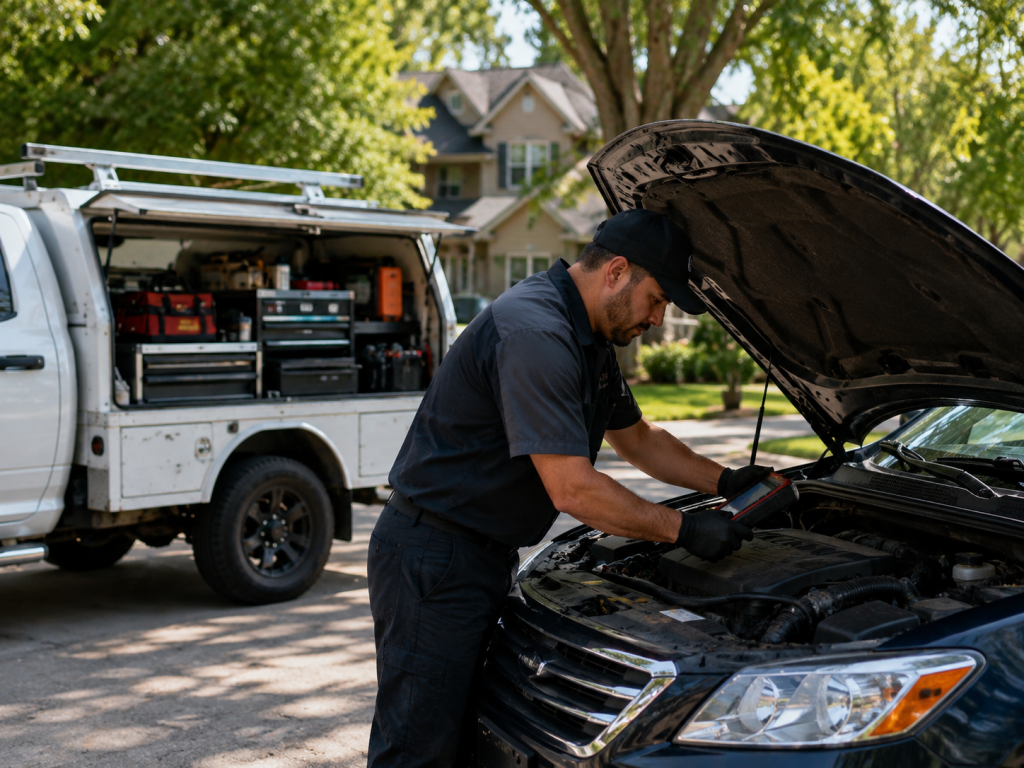
Dealing with a flat tire or a dead battery in Chandler’s summer heat is uncomfortable at best and potentially dangerous at worst, particularly if it happens on a busy road with limited shade. A mobile mechanic can come to your home or workplace to check tire condition, test your battery, and address developing issues before the heat has a chance to turn a minor weakness into a full breakdown on one of the hottest days of the year.
We covered the broader benefits of this approach in our article on why mobile mechanics are better than traditional auto shops in Chandler, which explains how convenience and proactive service come together, particularly valuable heading into another triple digit Arizona summer.
Get Ahead Of The Heat Before It Catches You Off Guard
Chandler’s extreme summer heat is not going anywhere, and neither is its effect on tires and batteries. Drivers who check these systems proactively, rather than waiting for an obvious failure, are far less likely to end up stranded on a sun baked roadside during the hottest stretch of the year. A few minutes of attention before the summer heat peaks is a small price compared to the discomfort and expense of dealing with a flat tire or a dead battery in the middle of a hundred and ten degree afternoon.
If it has been a while since your tires or battery were checked, visit our homepage to learn more about our services, or reach out through our contact us page to schedule a visit at your home or office anywhere in the Chandler area.
A little proactive attention now can help your tires and battery hold up against everything another Arizona summer is about to bring.